Mapúa University Week Opens with Turnover of Historic Murillo Velarde 1734 Map
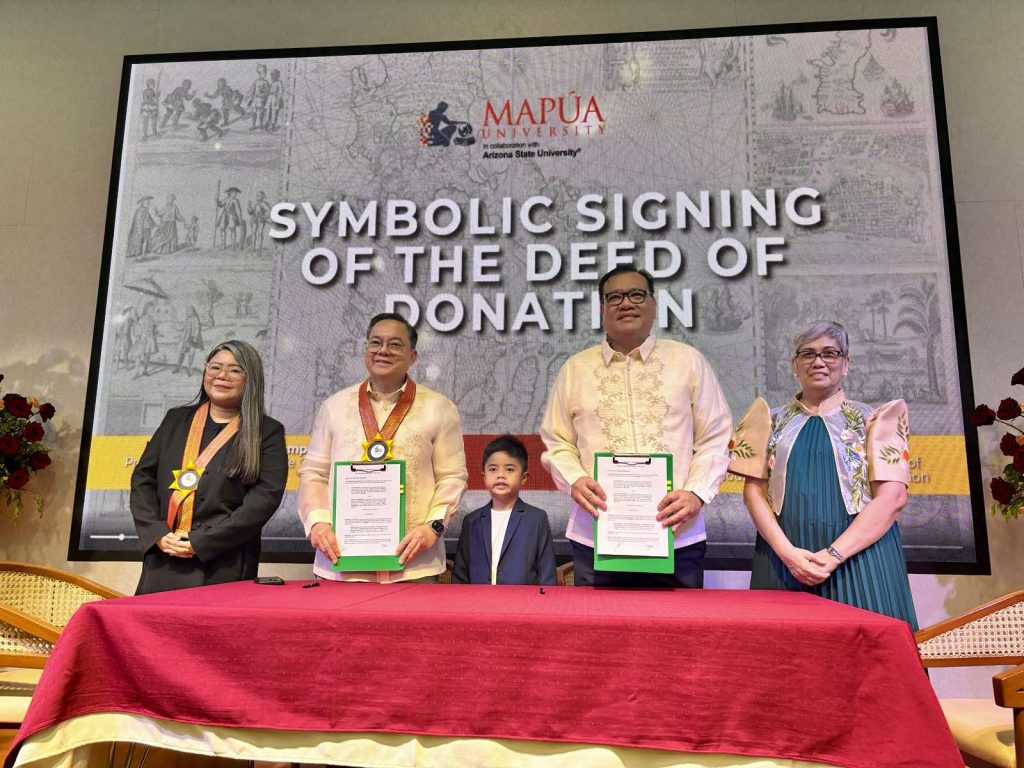
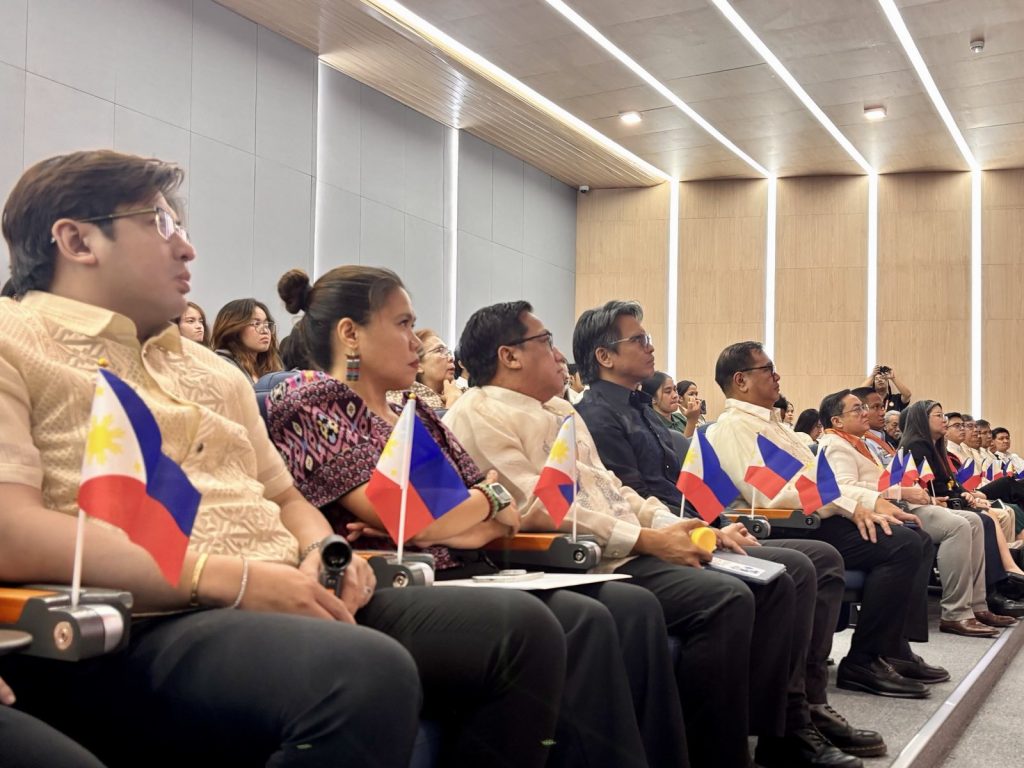
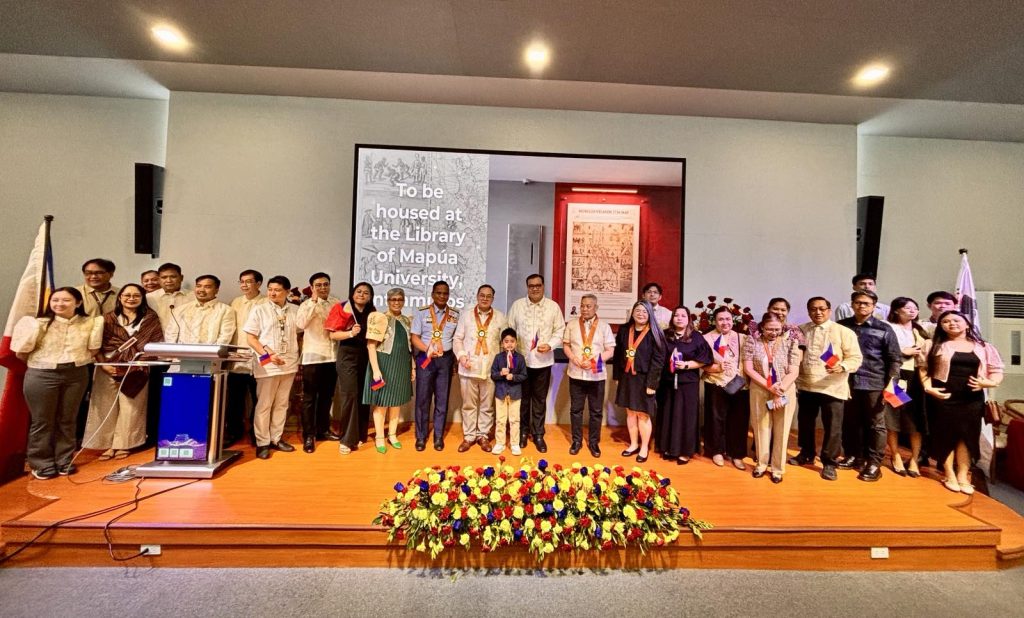
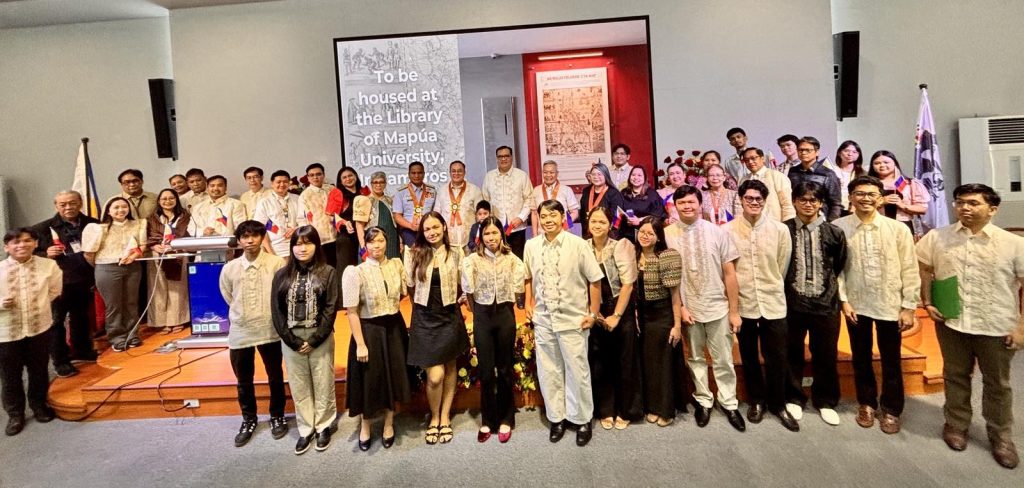
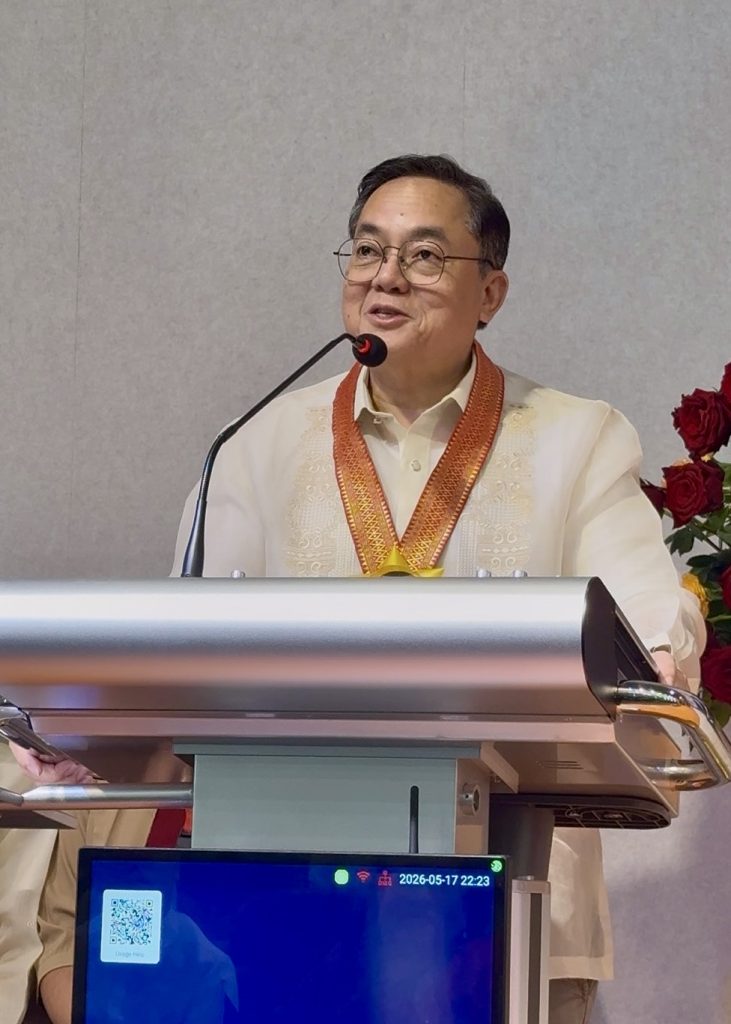
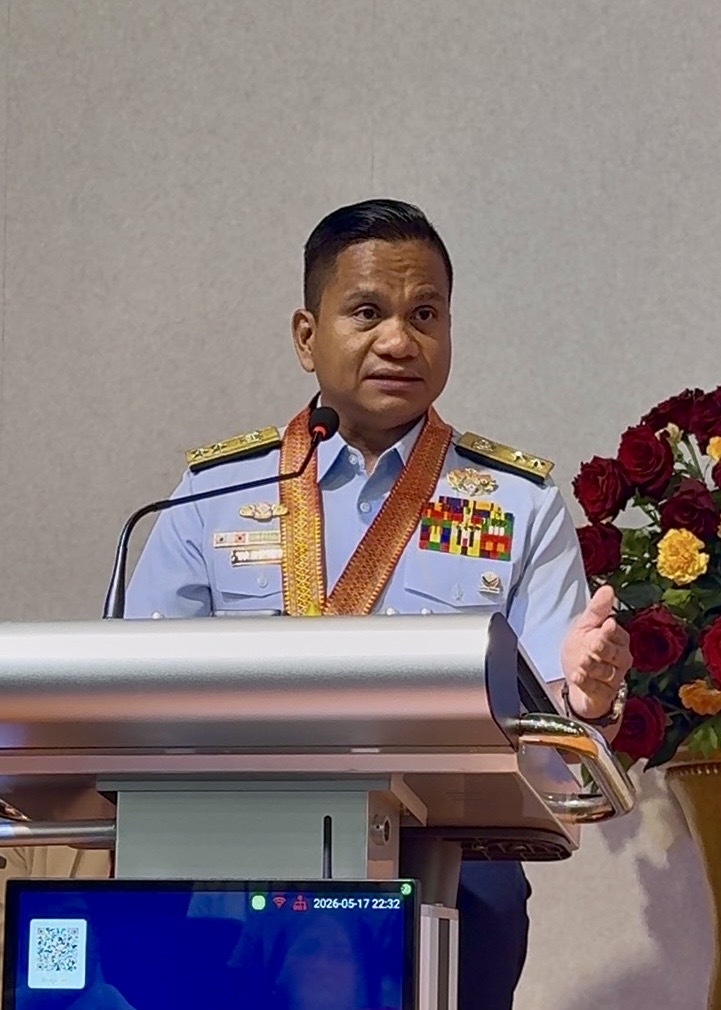
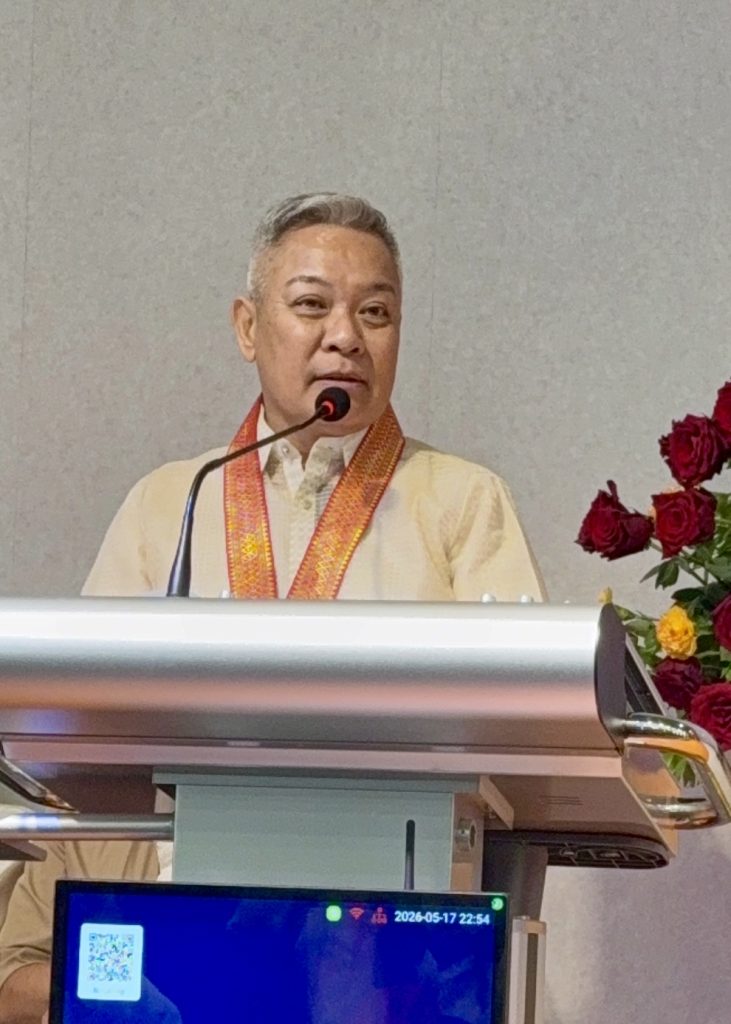
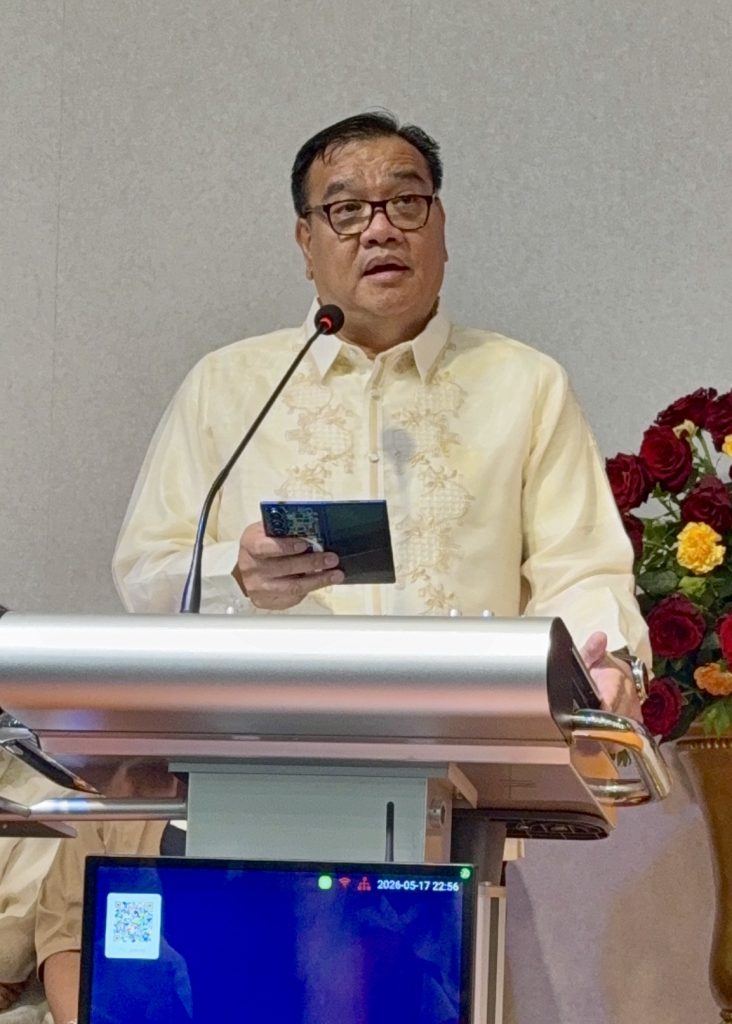
Mapúa University received an authenticated copy of the historic Murillo Velarde 1734 Map during a ceremonial turnover held on May 18, 2026, as part of University Week celebrations attended by university officials, faculty, students, and guests.
“Why was the map in a British castle in the first place? This is where the story becomes painful and important. The map was made here in Manila in 1734. It was commissioned by a Spanish Governor-General, ordered by King Philip V. They needed a map to prove that they owned us, a map of dispossession. It was organized by a Jesuit priest, Pedro Murillo Velarde. But to prove that dispossession, they needed the Indios—the dispossessed—to put it into life. This is critical,” Mr. Mel V. Velarde, chairman of the Asian Institute of Journalism and Communication (AIJC) and the NOW Group, said during the turnover ceremony.
Also present at the ceremony were Coast Guard Rear Admiral Jay Tristan Tarriela, PhD, commander of the West Philippine Sea Transparency Group, and Eric B. Zerrudo, PhD, National Commission for Culture and the Arts (NCCA) Chairman and Executive Director.
Mr. Velarde also underscored the contributions of Filipinos Nicolas de la Cruz Bagay and Francisco Suárez, who signed their work, affirming their role in the map’s production.
In his message, Zerrudo invited the guests to examine the map, noting its value as a visual narrative of the past. “Look at the illustrations closely because they tell a lot of stories of how we were at that point in time and how these places have become in the present,” he said.
Zerrudo thanked Mapúa University for its role in bringing the map closer to Filipinos. “Through this effort, we allow our young people to encounter history in a tangible and meaningful way, helping cultivate a broader appreciation of our shared heritage, and understand the stories and truths that continue to shape our identity as a nation.”
Admiral Tarriela also delivered a message during the ceremony. “When the People’s Republic of China unilaterally asserted its so-called nine-dash line, claiming nearly the entirety of the South China Sea, including waters and features that lie squarely within our own exclusive economic zone, they leaned on a historical fiction. They claimed historic rights stretching back to the time immemorial,” he said. “But history, ladies and gentlemen, leaves receipts, and the 1734 Murillo Velarde Map is one of our most important receipts that can never be defeated by fiction.”
Tarriela continued, “In 2016, the Permanent Court of Arbitration in The Hague handed down a landmark ruling. The tribunal categorically rejected China’s nine-dash line claim. It affirmed the Philippines’ sovereign rights over its exclusive economic zone, including Bajo de Masinloc and features within the Kalayaan Island Group. That ruling did not happen by accident. It was the product of years of meticulous legal work by our legal team and, of course, by Justice Antonio Carpio. It was supported, fundamentally, by historical evidence—maps like the one that we unveiled today.”
Dr. Dodjie S. Maestrecampo, University President and CEO of Mapúa University, expressed appreciation for the donation and emphasized how it will help strengthen national identity and inspire students to make meaningful contributions to the country’s future. He added, “Beyond its immense historical value, this map stands as a profound symbol of our sovereign rights in the West Philippine Sea and a vital tool for nation-building. And we will make sure that our students know this.”
The authenticated copy of the map is permanently housed at the Mapúa Intramuros Library.
The first scientific map of the Philippine archipelago, the Murillo Velarde 1734 Map was officially declared a National Cultural Treasure by the National Library of the Philippines in December 2025.
The turnover of the authenticated copy to Mapúa University forms part of the “Mapa Natin, Kwento Natin” campaign. By engaging students during University Week, the Mapúa turnover highlights how heritage and education intersect in shaping the next generation of Filipino innovators and nation-builders.