From AIJC to Galway: Princess Catherine Pabellano at IAMCR 2026
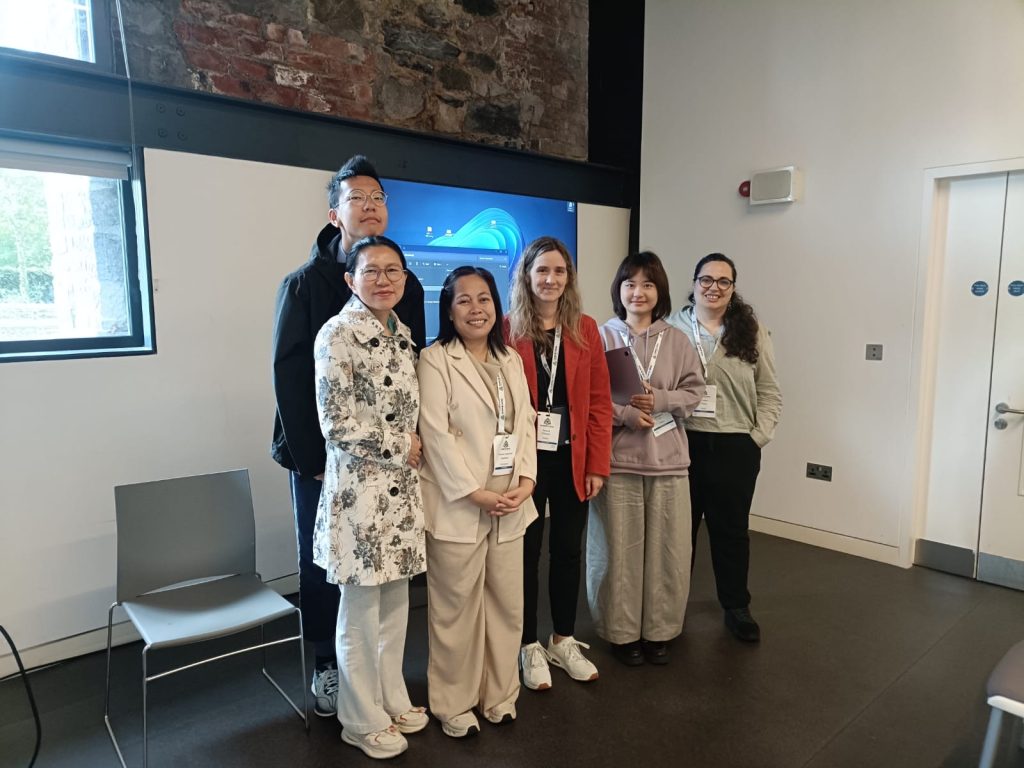
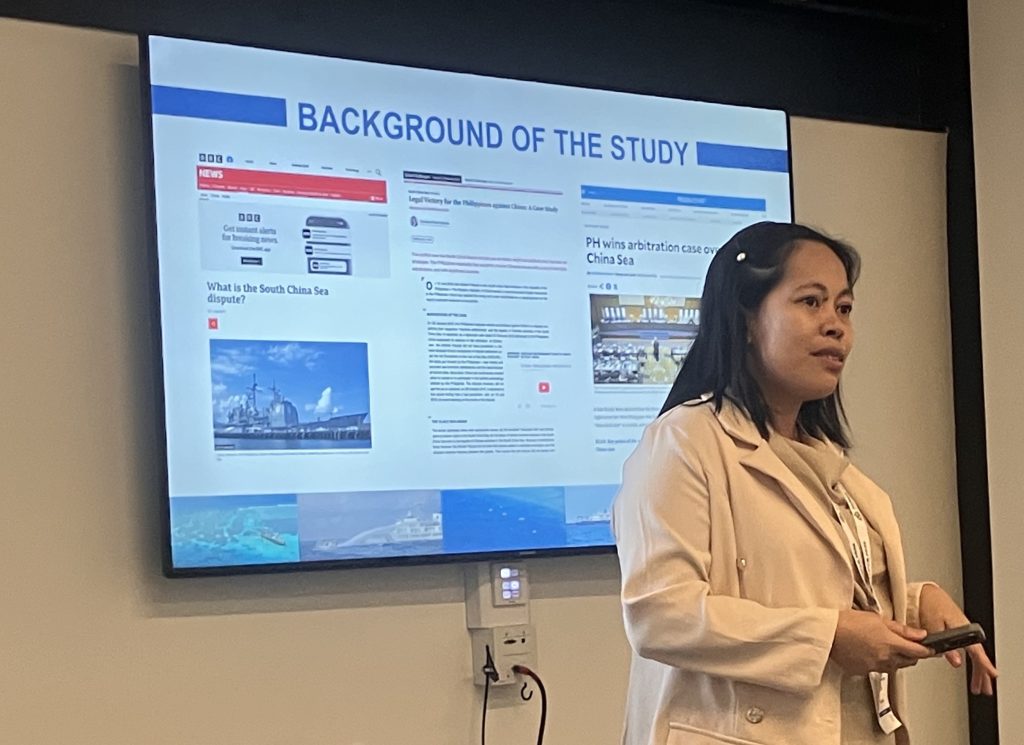
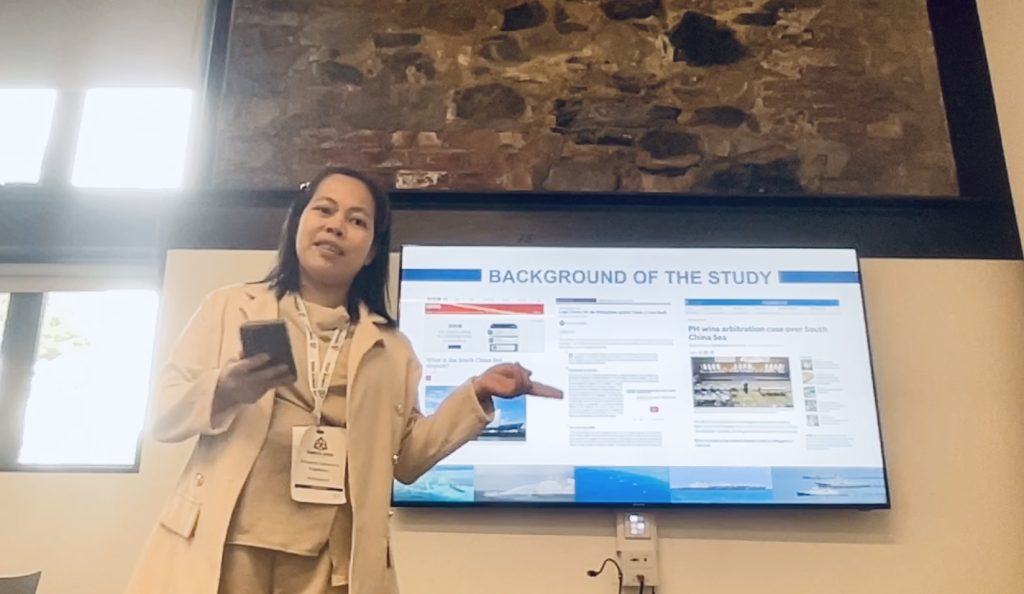
From the classroom to the global conference circuit, members of the Asian Institute of Journalism and Communication (AIJC) community extend the reach of their research through international scholarly exchange.
Princess Catherine Pabellano, who took up Master of Arts in Journalism at AIJC and is now faculty member at the University of the Philippines Los Baños, presented her master’s thesis on media framing of the West Philippine Sea at two international conferences, most recently at the International Association for Media and Communication Research (IAMCR) 2026 Conference in Galway, Ireland.
In this interview, Pabellano discusses the research journey that began at AIJC, the insights she gained from presenting at IAMCR 2026, and how the experience reaffirmed that meaningful research is measured by its contribution to society.
AIJC: Congratulations on presenting at the International Association for Media and Communication Research (IAMCR) 2026 Conference in Galway, Ireland. Can you briefly share about the research you completed as a student at AIJC and what inspired you to pursue it?
Pabellano: The research that I presented is part/a portion of my master’s thesis at AIJC titled “Framing of the West Philippine Sea Dispute in Philippine-Based and China-Based Online News Platforms and Its Implication on Conflict Reporting.” It was my initial proposal for the Research Methods course under Prof. Moppet [Varlez] that I eventually developed into my thesis under the guidance of Prof. Felnita Tan. I became interested in the topic when I encountered the Transnational Comparative Framing Model (TCFM) by Lei Guo, Avery Holton, and Sun Ho Jeong. It posits that different countries can frame a transnational issue differently based on their ideology. Hence, it prompted me to look at how the maritime dispute in the West Philippine Sea was framed by two of the countries that have strong claims on the disputed territory.
AIJC: What motivated you to submit your work to IAMCR, and how did your research connect with this year’s theme, “Peripheries and Connections: Media, Communication, and Transformation”?
Pabellano: IAMCR is one of the widest and most popular organizations in communication and media studies. Next to ICA [International Communication Association], their conferences are my dream avenue to present my research. It is actually my second time presenting my research at an IAMCR event. The first one was in 2024, when I presented my study that I completed as part of the requirements for the class of Prof. [Christine] Avendaño of AIJC. I was not very optimistic that I would be able to present at that time because the conference was in New Zealand. However, I was selected as one of the recipients of IAMCR’s travel grant, and I was able to secure some funding from the local government of Lucena. When I finished my thesis in December 2025, I promised myself that this research should be presented on a bigger platform. I feel like I owe it to my study and to the people who helped me along the way to disseminate it to a global audience. Regarding this year’s conference theme, I think my research is aligned with it because it examines how media construct competing narratives about a geopolitical conflict which is often positioned at the margins of global power. In the process, it reveals how communication processes shape international relations and public understanding
AIJC: This was your second time presenting your research at an international conference, following your presentation at the 4th FRAMEwork: Asia-Pacific Communication Conference in Manila. What was it like presenting to an international audience outside the Philippines, and what feedback or insights stood out to you?
Pabellano: The international audience outside the Philippines is more interested in the impact of my study rather than the methodology and framework. I believe it affirms that research must be conducted in order to be beneficial to the communities we are studying. What stood out for me is how the findings and conclusions of my study can contribute to the field of journalism, particularly in conflict reporting.
AIJC: How did your education and experiences at AIJC help prepare you for this opportunity?
Pabellano: My education and experiences at AIJC opened many opportunities for me. For instance, right after completing my master’s at AIJC, I was hired as faculty at UPLB. And UPLB is the one that provided funding for my participation in IAMCR. The trust and support of the faculty of AIJC, particularly Dr. Paz [Diaz] and Prof. Moppet [Varlez] encouraged me to take chances in the international academic landscape. The strong theoretical foundation from the class of Atty. Elgene [Feliciano] gave me confidence that I am on the right track in the research framework that I decided to explore. And of course, the critical lens from the class of Prof. Rommel [Lopez] and the technical writing skills from the class of Prof. Avendaño were equally significant in this endeavor.
AIJC: What were your key takeaways from IAMCR 2026?
Pabellano: On a personal note, what I got from this experience is to keep on taking chances. Even if the possibilities are slim, we have to take chances because chances never taken become regrets. From an academic perspective, the participation in the conference rekindled my love for research. I realized that more than the academic satisfaction of discovery, research plays an important role in examining important issues in society in order to recognize which voices are amplified and which are silenced. Or which narratives are highlighted. This is an initial step to recognize the inequality or equality proliferating in the global media. And if there [is] inequality, findings of our research would help dismantle these kinds of narratives.
AIJC: What advice would you give current students who intend to share their research through international conferences?
Pabellano: Do not invalidate or devalue yourself, your abilities, or your study. Subject your research to academic review because only then can it be improved. There will be rejections. Last year, my paper was declined in IAMCR 2025 in Singapore. While initially disheartened, I pushed myself to rise from the situation. I tried again this year.
AIJC: Are there any other upcoming conferences you plan to join? How are you preparing for them?
Pabellano: Two other researches on the same topic (West Philippine Sea dispute) were accepted [for] the AMIC Conference in Manila this November, and the 11th International Communication and Media Studies Conference this October in Singapore. A paper on risk disaster reportage was also accepted [for] a conference in Kyoto in October, but for this I opted for an online presentation. Currently, I am finalizing my full paper for the AMIC conference. I am reviewing the highlights and impact of the study, as I have learned from attending IAMCR 2026 that these are the important areas that should be included in the presentation.